
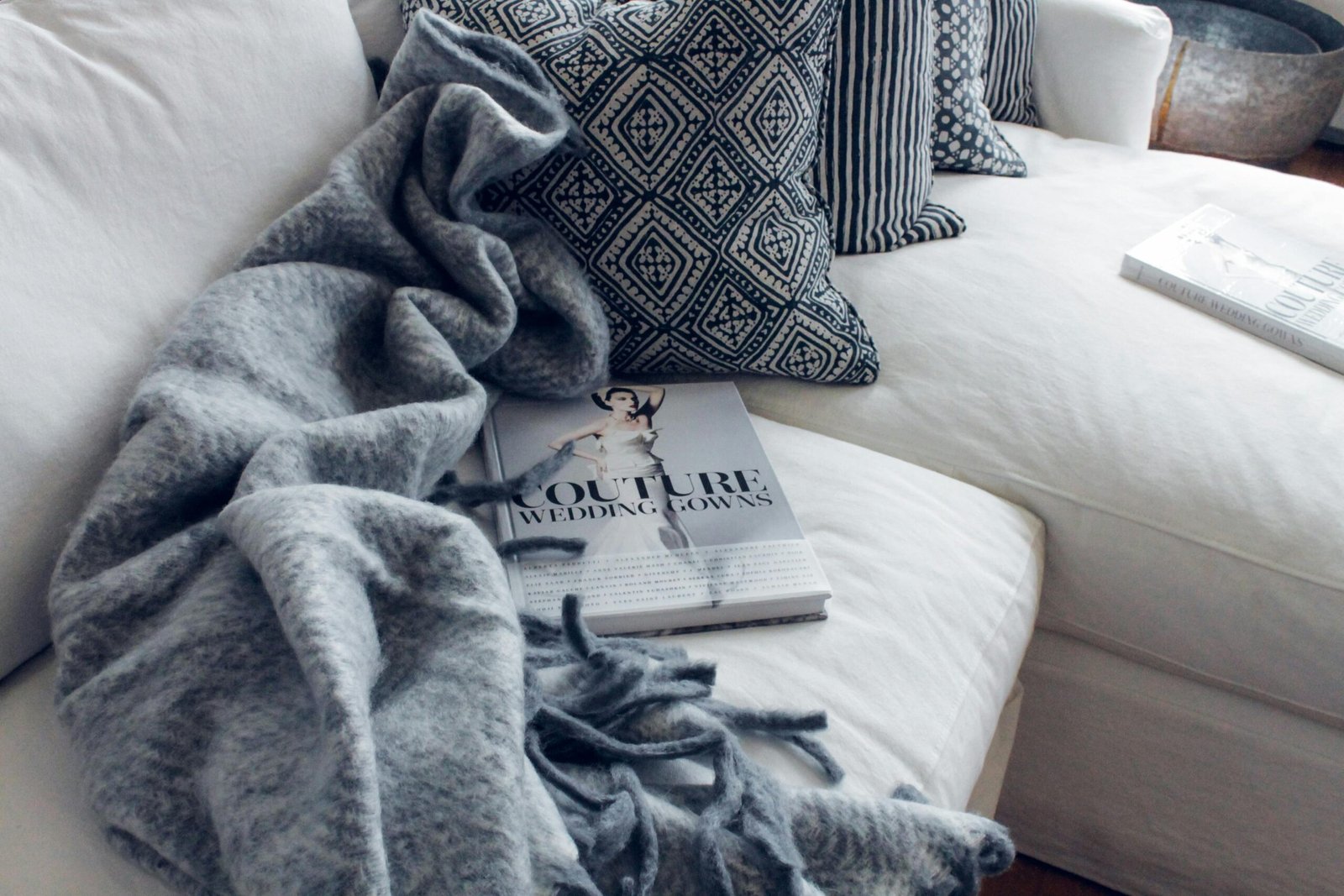
A gentle post-holiday declutter can help create space for calm after the season of more
After weeks of decorations, gatherings, extra purchases, and emotional intensity, the holidays leave behind more than just memories. They leave objects, visual noise, half-used gifts, and a subtle sense of overwhelm that lingers long after the lights come down.
It’s not always obvious at first.
Instead, it shows up as restlessness — a low-level feeling that your space, and maybe your mind, is a little too full.
This is where a post-holiday declutter becomes less about organization and more about care.
This isn’t a reset or a dramatic purge — just a gentle return to space, clarity, and calm.
When the Holidays Leave More Than They Take
The holidays are generous by nature. They bring warmth, connection, and meaning — but they also bring more.
More decor, more objects, more decisions — and, with them, more emotional weight.
By January, our homes often reflect that accumulation. Surfaces feel crowded. Drawers won’t close properly. Closets contain items we didn’t choose but now feel responsible for.
And layered on top of the physical clutter is something quieter: mental fatigue.
The constant input of the season — planning, hosting, socializing, consuming — leaves very little room for stillness. So when the calendar turns, it’s natural to crave openness again.
Decluttering in January isn’t about fixing anything.
Instead, it’s about creating breathing room.
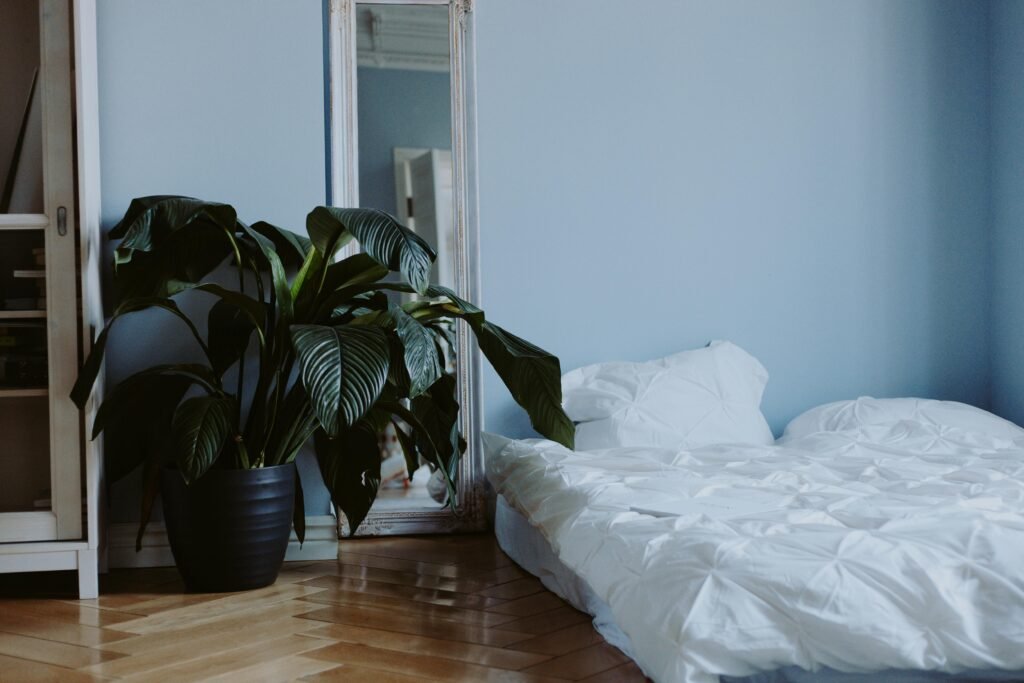
A Graceful Approach to Decluttering
Importantly, this is not a call to empty your home in a weekend.
In fact, the most effective post-holiday decluttering happens slowly — one drawer, one surface, one small decision at a time.
This approach pairs beautifully with A Gentle Reset: My January Routine for a Fresh Start, where I focus on easing back into daily rhythms.
Think of it less as decluttering and more as editing.
Editing asks gentler questions:
Does this still belong in my daily life?
Does this support how I want my home to feel right now?
Is this something I’m ready to keep carrying?
You don’t need answers for everything. You just need to begin.
Starting Small: A Gentle Post-Holiday Declutter
Understandably, the temptation in January is to tackle everything at once. But that often leads to fatigue, unfinished piles, and more overwhelm.
Instead, start with a space that feels contained.
A bedside table.
A kitchen counter.
A single drawer.
Clear it completely if that feels manageable — or simply remove what no longer fits. Wipe the surface. Put back only what serves a purpose or brings a sense of calm.
In other words, stopping there is not failure — it’s intention.
When you declutter this way, each small space becomes a quiet success rather than a reminder of what’s left to do.
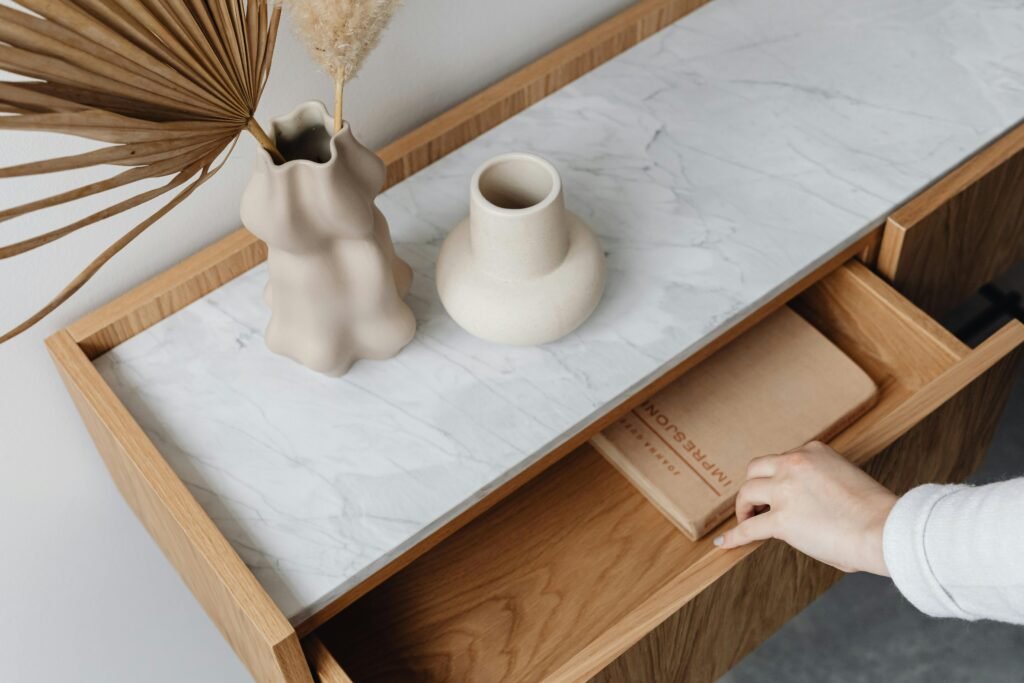
Making Thoughtful Decisions About What Leaves
One of the hardest parts of post-holiday clutter is deciding what to do with items that are still technically “good.”
Gifts you don’t love.
Decor that doesn’t suit your home anymore.
Objects that were meaningful once but no longer feel right.
Here’s a gentle rule that helps:
If an item creates guilt, obligation, or visual tension, it’s already costing you something.
Letting go doesn’t mean you’re ungrateful.
It means you’re choosing alignment.
When possible:
Donate items in good condition to local charities or shelters
Pass along gifts that would genuinely suit someone else
Recycle responsibly when donation isn’t appropriate
Sustainable decluttering isn’t about perfection — it’s about moving things forward instead of storing them indefinitely.
Letting go responsibly matters too — donating and rehoming items helps reduce waste and extend the life of what we no longer need, something increasingly important as conversations around overconsumption and household waste continue to grow.

Restyling for Winter Calm
Once the excess has been edited, resist the urge to refill the space.
January isn’t a month for adding. It’s a month for letting the quiet show.
This is where form supports function.
Soft textures.
Neutral tones.
Open surfaces.
Light that has room to move.
You might:
Replace bright holiday decor with simple ceramics or greenery
Move furniture slightly to allow more flow
Reduce the number of items on display
A calmer visual environment makes everyday life feel lighter — especially during winter, when days are shorter and energy is lower.
Your home doesn’t need to be minimal.
It needs to be supportive.
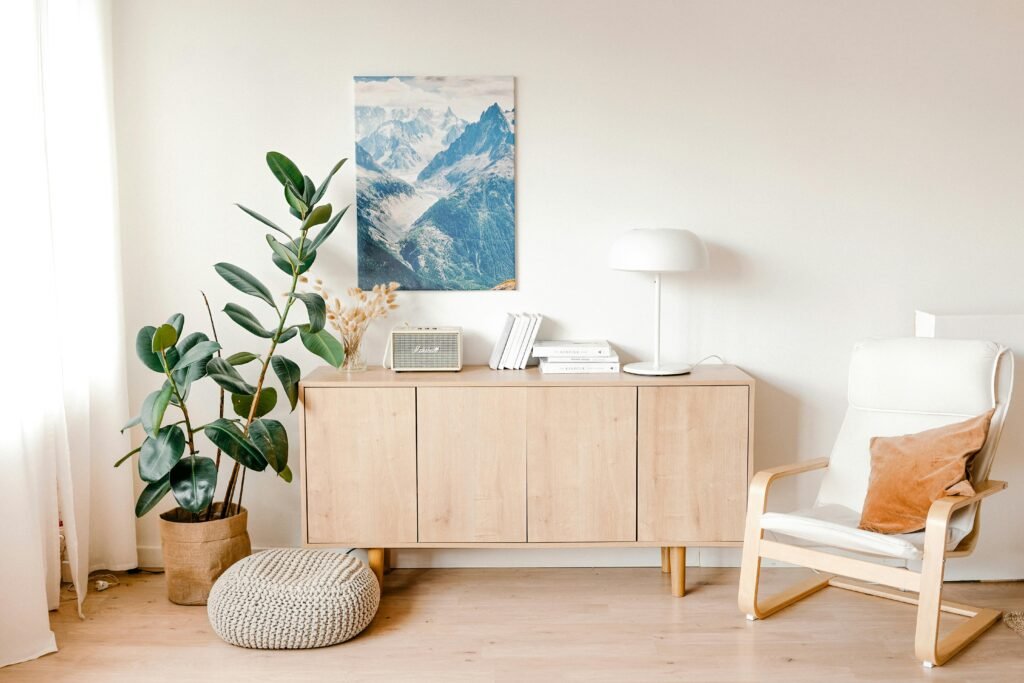
How a Post-Holiday Declutter Becomes an Act of Self-Care
We often talk about self-care as something we do outside the home — routines, rituals, rest.
But space itself is a form of care.
A clear surface is easier to clean.
An edited closet is easier to use.
A calmer room asks less of you when you’re already tired.
Decluttering is not about aesthetics.
Rather, it’s about reducing friction.
When your environment works with you instead of against you, daily life becomes softer — not because you’re doing more, but because there’s less in the way.
Let This Be Enough
Ultimately, there is no finish line here.
Some spaces will stay messy, some decisions will wait, and some items will remain for now. That’s okay.
The goal of a post-holiday declutter isn’t to create a perfect home. It’s to create a home that feels like a place you can rest again.
Even one cleared drawer can do that.
Even one simplified surface can change how a room feels.
Even one small act of letting go can bring relief.
A post-holiday declutter doesn’t need to be dramatic to be effective.