

Evenings don’t announce themselves.
They arrive quietly, often while we’re still carrying the day in our bodies — conversations unfinished, thoughts looping, energy stretched thin. Even when the house is quiet, the mind rarely is.
For a long time, I thought I needed a better nighttime routine. Something structured. Something impressive. Something I could follow perfectly.
What I actually needed was permission to slow down without performing rest.
This 15-minute evening routine isn’t about winding down efficiently.
It’s about closing the day gently, so I don’t carry it all into tomorrow.
Creating a Threshold Between Day and Night
Most of us don’t struggle with sleep because we’re doing too little.
We struggle because we never fully leave the day.
We move straight from work to screens, from stimulation to bed, without a moment that signals: this part is over now.
My evening routine begins by creating a threshold — a small, physical shift that separates day from night.
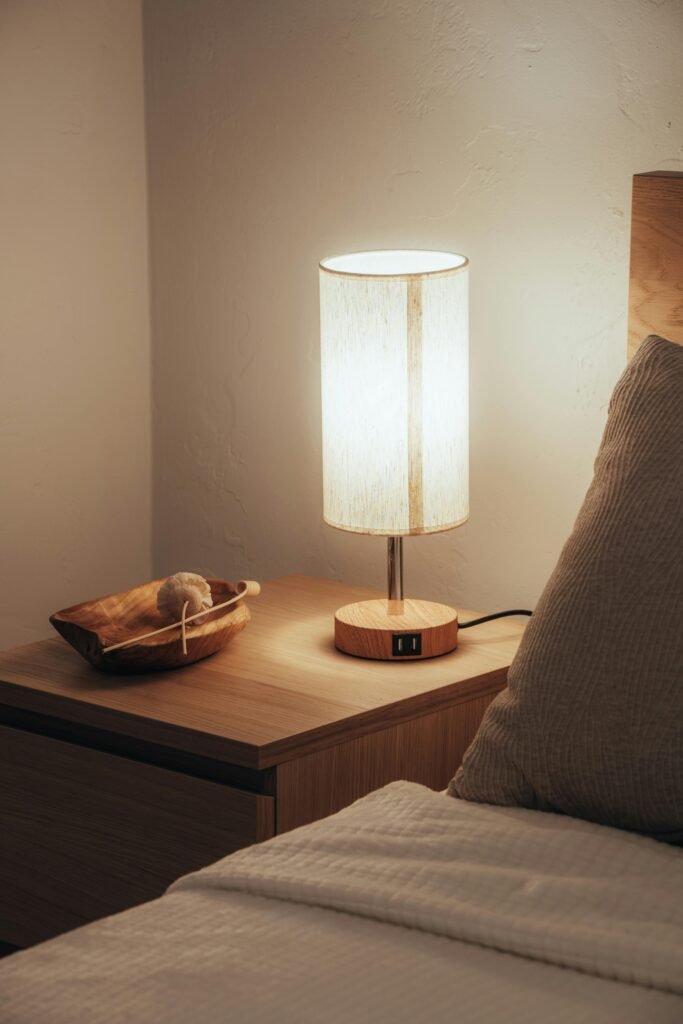
I turn off overhead lights.
I leave only soft lamps or warm light on.
Sometimes I light a candle, sometimes I don’t.
Lower light in the evening supports the body’s natural sleep rhythms.
The room changes. And so does my body.
It’s subtle, but it matters. The nervous system responds to these cues long before the mind catches up. Lower light, softer edges, slower movements — all of it says: you can stop holding everything so tightly now.
Letting Scent Do the Work
There are nights when my mind feels too loud to reason with.
That’s when scent becomes my shortcut.
I reach for the same candle, the same hand cream, the same familiar smell I’ve returned to for months. Over time, it’s become a quiet signal — not something I consciously think about, but something my body recognizes.
This smell means rest.
This smell means the day is closing.
I don’t switch it up often. Consistency is what makes it calming. The repetition creates safety — and safety is what allows the mind to soften.
Over time, I’ve returned to the same few scents — lavender, sandalwood, or something softly herbal — letting familiarity do the work.
There’s no rush here. I let the scent exist in the room without asking anything of it.

A Few Minutes of Gentle Closure
This is the least defined part of my routine — and the most important.
I don’t clean the whole space.
I don’t reset everything.
I choose one small act of closure.
Sometimes it’s clearing a single surface.
Sometimes it’s stretching on the floor.
Sometimes it’s sitting quietly with a warm drink, doing absolutely nothing.
What matters isn’t the action itself — it’s the feeling of completion.
This same philosophy shows up in how I think about goals, too.
So much of modern life stays open-ended. Messages unanswered. Tasks postponed. Thoughts unresolved. This small moment is where I close something — anything — on purpose.
It reminds me that not everything needs to be carried forward.
Writing One Line Before Bed
Before I sleep, I write one sentence.
Not a journal entry.
Not a reflection meant to be revisited.
Just one line — something I noticed, something I appreciated, or something I’m ready to let go of.
This is how I empty my pockets before bed.
When thoughts stay unspoken, they tend to resurface as soon as the lights go out. Writing one sentence gives them somewhere to land. It doesn’t solve everything — but it softens the edges enough to rest.
Some nights the sentence is thoughtful.
Other nights it’s simple.
Both are enough.

Why This Routine Works (Even on Imperfect Days)
This routine works because it doesn’t ask me to become a different person at night, and thats what makes this 15-minute evening routine sustainable: how little it asks of you.
It doesn’t rely on motivation, discipline, or ideal conditions.
It doesn’t fall apart if I’m tired, busy, or emotionally full.
If I only dim the lights, it still counts.
If I skip the writing, nothing breaks.
If I do it half-heartedly, it still helps.
The goal was never perfection.
The goal was returning to myself before sleep.
That’s why I’ve written before about why simple routines tend to last longer than perfect systems.

Closing the Day With Intention
Rest doesn’t begin when you fall asleep.
It begins when you decide the day is allowed to end.
This routine isn’t about doing more.
It’s about noticing when it’s time to stop — and honoring that moment with care.
Most nights, a 15-minute evening routine is enough to soften the edges of the day. Enough to quiet the mind. Enough to feel held instead of hurried.
And the majority of nights, that’s all I need.